Equitable Education: Learning for a Just Future
- Michelle Soku
- Apr 18
- 4 min read

(EQUITABLE EDUCATION card)
On the dusty road leading to Kofi’s village in northern Ghana, the school building stood like a promise half-kept. Its walls were cracked, the roof leaked during the rains, and the library was a single shelf with worn-out books. Yet every morning, children walked long distances to sit on wooden benches, eager to learn. Kofi’s mother often said, “Education is the key,” but sometimes Kofi wondered: a key to what, and for whom? If the lock itself was broken, could the key still open any doors?
Kofi loved numbers and stories. He dreamed of becoming an engineer who could design better roads and water systems for his community. But his school had no science lab, no computers, and not enough teachers. When the rains were late and the harvest was poor, some of his classmates stayed home to help on the farm. Others dropped out entirely, their dreams traded for survival. Meanwhile, on his cousin’s WhatsApp status, Kofi saw photos of a private school in Accra — bright classrooms, tablets on every desk, a playground with colorful swings. Both schools were in the same country, under the same flag, yet they felt like different worlds.
One day, a group of university students visited Kofi’s school as part of an outreach program. They brought books, footballs, and a projector. For the first time, Kofi watched an educational video on a big screen, showing children in different African countries solving problems in their communities. A girl in Kenya had built a simple hand-washing station for her village. A boy in Nigeria had created a small solar-powered device to charge phones. The visitors asked Kofi’s class, “What problems do you see here? What would you like to change?” Kofi’s mind raced with ideas — better water storage, safer roads, a stronger school roof.
After the session, one of the visitors, a young woman named Nana, stayed behind to talk. She had grown up in a low-income neighborhood in Accra and knew what it meant to study under pressure. “Equitable education,” she explained, “means more than just having a school building. It means making sure every child, no matter where they are born, has a real chance to learn, to be safe, and to dream.” She spoke about hidden barriers — school fees that families could not afford, girls missing class because of period stigma, children with disabilities left out because there were no ramps or trained teachers.
Kofi listened, feeling both seen and unsettled. He had always thought that struggling in school was his personal problem — maybe he just needed to work harder. Now he began to see that the system itself was uneven. Some children started the race far ahead, with better resources and support, while others like him ran uphill from the very beginning. “So what can we do?” he asked. Nana smiled. “We can start by telling the truth about what we see. And then we can organize.”
Weeks later, Kofi’s teacher announced a new project: each student would write a short piece about education in their community — the challenges and the changes they wanted to see. The best pieces would be shared with local leaders and posted online through a youth platform called Armed With Pens. Kofi poured his heart into his essay. He described the long walks to school, the crowded classrooms, the days when hunger made it hard to concentrate. But he also wrote about the joy of learning, the pride he felt when he solved a difficult math problem, and the way his classmates helped each other revise under the neem tree.
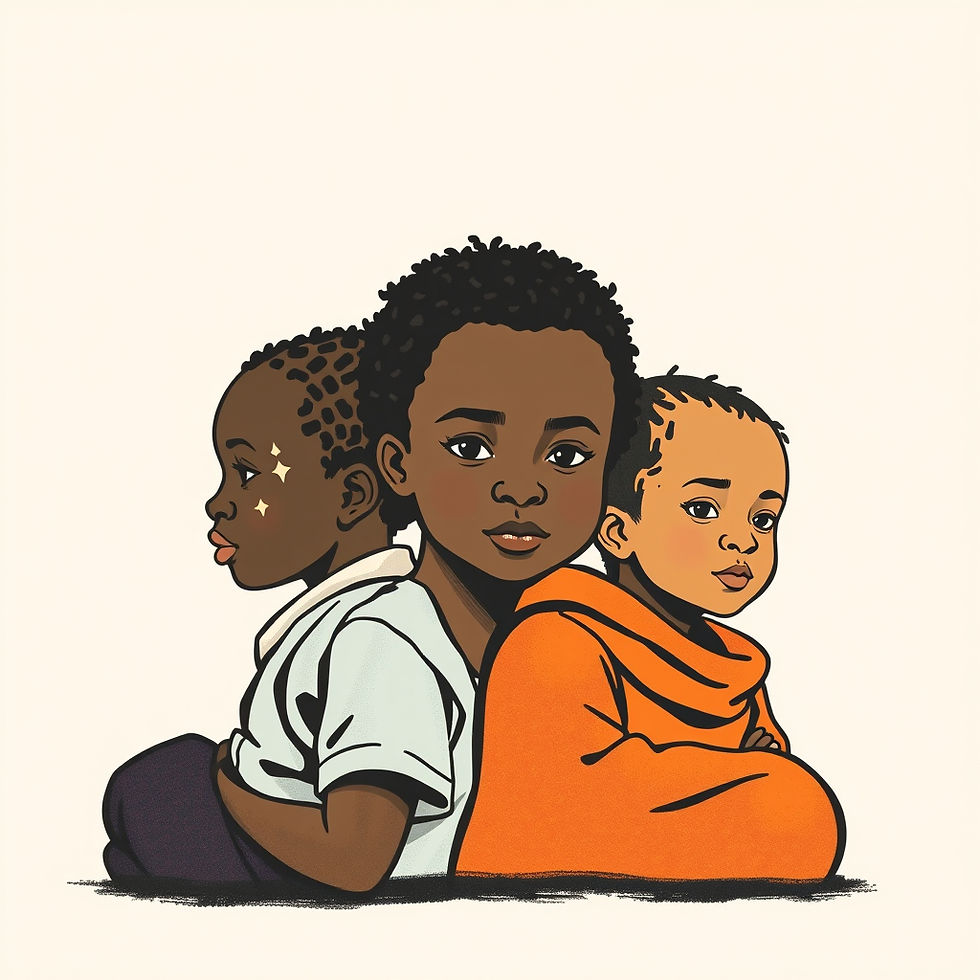
In his story, Kofi imagined a future where his village school had a proper library, where teachers were well-trained and respected, where girls stayed in school without fear of harassment or early marriage, and where children with disabilities had the tools they needed to learn alongside everyone else. He wrote about community members contributing what they could — labor, materials, ideas — and about local authorities listening to students’ voices when planning budgets and policies. Education, he argued, should not be a privilege for the few. It should be a shared investment in a just future.
When Kofi’s essay was selected to be read at a community meeting, he felt his stomach twist with nerves. The gathering included parents, teachers, religious leaders, and a representative from the district education office. Standing in front of them, Kofi’s voice shook at first, but grew stronger as he spoke. He did not blame or accuse. Instead, he painted a clear picture of what was, and an inspiring vision of what could be. When he finished, the room was quiet. Then an elder cleared his throat. “The boy is right,” he said. “We have accepted too little for too long.”
The discussion that followed was lively. Some people worried about money. Others questioned whether change was realistic. But a few concrete ideas emerged: organizing community workdays to repair the school, creating a small fund to support the poorest students with uniforms and supplies, inviting NGOs to partner on teacher training and learning materials. The district officer promised to raise the issue of overcrowded classrooms at the next meeting. It was not a miracle transformation, but it was a beginning.
Equitable education is not just about test scores or fancy buildings. It is about dignity — making sure every child feels that their mind matters, that their questions are welcome, and that their future is not decided by their birthplace or their parents’ income. Across Africa, from crowded city schools to remote village classrooms, young people like Kofi are asking hard questions and offering bold ideas. They are writing essays, starting clubs, mentoring younger students, and pushing adults to see education as a right, not a favor.
As the sun set over his village, Kofi sat outside with his notebook, sketching designs for a simple rainwater collection system for the school. He knew that the road ahead would not be easy. Resources were limited, and change could be slow. But he also knew that every step — every story shared, every meeting held, every small improvement made — was part of building a more just future. Education, he realized, is not just the key to his own success. It is the key to unlocking the potential of his entire community, and of a continent ready to write its own story of justice and possibility.


Comments